

Perspective · Team & culture
Why team-building matters more than ever in the age of AI
As artificial intelligence automates more digital work, human connection, collaboration, and shared experiences are becoming increasingly valuable.

- Topic
- Team & Culture
- Audience
- People Leaders · Organizers · Founders
- Format
- Perspective
- Depth
- Long Read
- Reading Time
- 7 min read
- Updated
- June 2026
2026
AI is rapidly transforming how people work.
Meetings are summarized automatically. Content is generated instantly. Tasks that once required entire teams can now be handled by software in seconds.
At the same time, something else is becoming increasingly valuable: human interaction.
As more work becomes digital and automated, experiences that create collaboration, movement, shared memories, and real-world interaction are becoming more important — not less.
The paradox of automation
The more efficient digital work becomes, the easier it is for teams to drift apart.
Digital efficiency keeps climbing. Status updates get shorter, handovers happen in threads, decisions get logged in tools. The time people used to spend together — accidentally, casually, socially — quietly shrinks.
Teams may communicate constantly online while interacting less meaningfully in person. That creates a growing need for something most organizations have under-invested in: intentional social experiences.
"If AI is going to handle the structured work, the unstructured work — connection, trust, shared memory — is what we're left to do well."
Why shared experiences matter
Teams rarely build strong relationships through dashboards alone.
Shared experiences create the kind of social material that no tool can manufacture on its own.
Emotional memory
Moments people actually remember — small stories that outlast the project.
Spontaneous interaction
Conversations that weren't on the agenda, but end up mattering most.
Trust
Familiarity built in lower-stakes settings becomes high-stakes safety later.
Social familiarity
Knowing how someone laughs changes how you read their Slack message.
Movement, play & collaboration
Play is a social framework, not a perk.
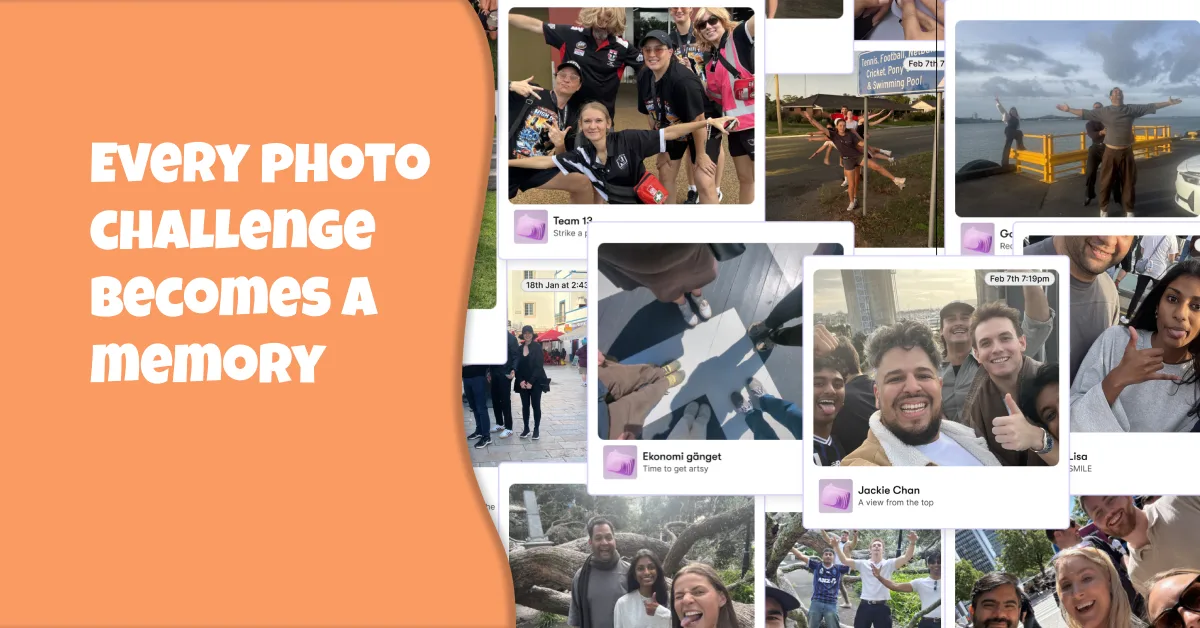
Gameplay, exploration, and movement give people a low-pressure reason to interact. The structure of a game turns awkward introductions into shared missions, and shared missions into small stories teams retell for weeks.
In a year when so much work happens behind a chat window, multiplayer real-world experiences quietly do the heavy lifting on culture — without ever calling it that.
Low-pressure entry
Gameplay gives shy participants a script and a reason to engage.
Built-in collaboration
Squads, checkpoints, and missions create natural reasons to lean in.
Movement
Bodies in motion change conversations — even short walks reset dynamics.
Shared language
Inside jokes from the day become the team's vocabulary the week after.
The future of team-building
AI handles the structure. People are left with everything that matters.
The next generation of team experiences will likely blend AI, personalization, multiplayer systems, and real-world interaction — with humans firmly in the centre of the loop.
As AI continues to absorb more structured digital tasks, human- centered experiences may become one of the most important ways organizations maintain culture, creativity, and collaboration.
Why this matters for events
The bar for "worth being in the room" just got higher.
Conferences
Programs are now competing against an AI that summarises the whole agenda in 30 seconds. The room itself has to be the reason to be there.
Hybrid work
When most days are remote, the in-person days have to do more emotional work than ever — not less.
Distributed teams
Quarterly offsites are no longer optional; they're the connective tissue holding distributed culture together.
Company culture
Culture is what people remember about their colleagues. Shared experiences make that memory richer and more specific.
Onboarding
New joiners need stories and faces, not just docs. The first real interaction shapes the next year of work.
Customer & partner moments
Relationships are a renewable resource only if they're occasionally renewed in person.
Build experiences people actually remember.
See how ReadySet helps teams create the kind of moments that AI can't generate.
Build an activation like this
Your venue. Your brand.
Our engine.
ReadySet powers branded interactive experiences for agencies, brand teams, and enterprise event programs, without the standalone app build.