

Inspiration · City exploration
Turning cities into multiplayer experiences
How ReadySet powers cinematic, social, immersive city-scale gameplay, for team building, brand activations, tourism, and university orientation.

- Setting
- Outdoor · City Streets
- Best For
- Offsites · Brand Activations · Orientation
- Format
- City-Scale Multiplayer
- Group Size
- 40–500
- Duration
- 90 min – 3 hr
- Tech Needed
- Phones + ReadySet App
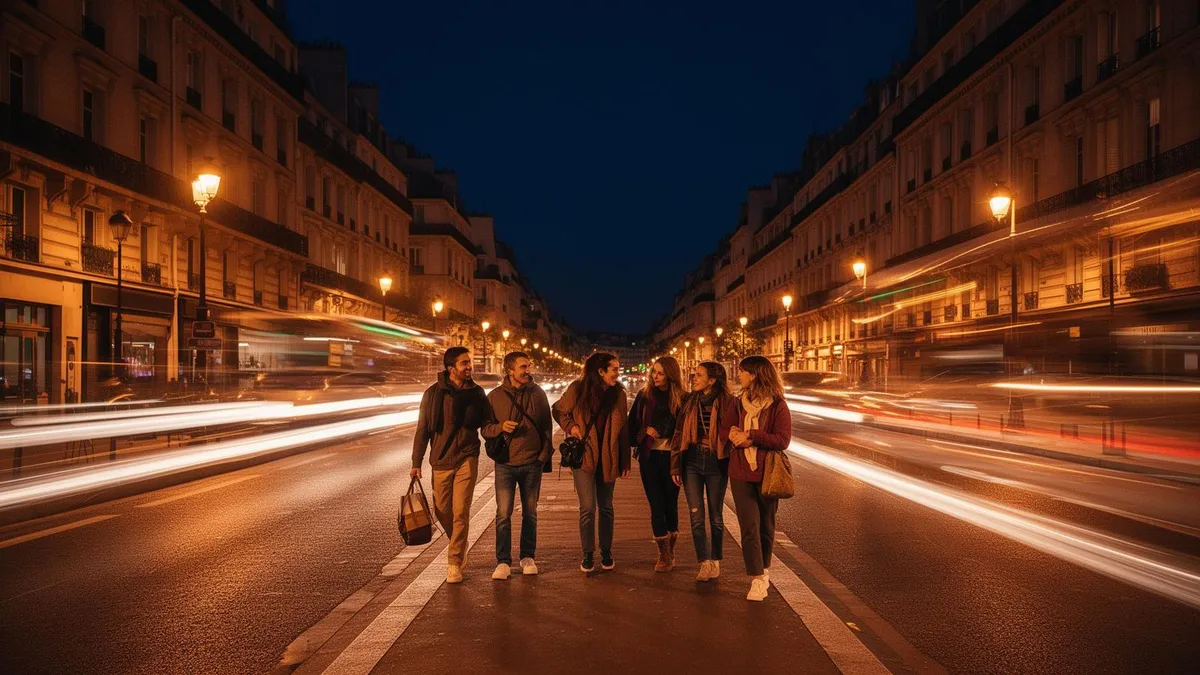
The most memorable ReadySet experiences don't happen in a ballroom. They happen on a boulevard at dusk, in a museum after-hours, or across a quarter that wakes up the moment 200 people start hunting through it.
City-scale gameplay flips the relationship between place and play. The streets become the board. The landmarks become the missions. The group of strangers in matching wristbands becomes the team that walks past the same café and recognises it the next morning.
Whether the brief is team building, brand activation, tourism, or first-week university orientation, the recipe is the same: a strong narrative spine, a walkable boundary, three or four memorable beats, and a finish line that turns into a photo.
Why cities work so well
The setting is already half the design.
Cities ship with everything a great multiplayer experience needs. ReadySet just turns the lights on.
Natural exploration
Streets, alleys, plazas — cities are already designed to be walked and discovered.
Landmark anchors
Recognisable places become mission targets without any extra signage or build.
Movement built in
Pacing happens automatically. Distance between checkpoints becomes part of the experience.
Hidden details
Every neighbourhood holds quirks worth turning into challenges — graffiti, plaques, balconies, doors.
Social spaces
Cafés, parks, and squares are natural gathering points for team check-ins and finish-line moments.
Immersion
The setting carries half the atmosphere. Sound, light, and weather become part of the design.
Experience formats
Eight shapes the city plays well.
Same engine, very different events. Each format leans on a different combination of pacing, social design, and route geometry.
Team-Building City Races
- How gameplay works
- Pre-assigned teams race through a curated checkpoint route across a downtown grid, scoring on speed, accuracy, and creative photo missions.
- Why multiplayer matters
- Competition lights up the leaderboard while teams huddle to make decisions at every checkpoint.
- Pacing & exploration
- 60–90 minute window with a live finish-line moment — high intensity, single arc.
Tourism Discovery Games
- How gameplay works
- A narrative-led route through a neighbourhood's signature streets, with trivia and photo missions at each landmark.
- Why multiplayer matters
- Pairs and small groups play side by side, comparing finds and unlocking shared bonus checkpoints.
- Pacing & exploration
- Pick Up & Play across a half-day or full day — exploration paces itself.
University Orientation Experiences
- How gameplay works
- Incoming students play through a campus-and-city loop that introduces buildings, departments, and student-life venues.
- Why multiplayer matters
- Cohort teams meet on day one and arrive at week two already knowing each other.
- Pacing & exploration
- Pick Up & Play across orientation week, with a kickoff race and a closing recap.
Conference City Exploration
- How gameplay works
- An after-hours layer that extends a conference into the host city — partner venues, host-city landmarks, and food stops as checkpoints.
- Why multiplayer matters
- Small ad-hoc teams form at the booth, head out together, and come back with the strongest stories of the week.
- Pacing & exploration
- Evening session, 2–3 hours, walkable loop with a social finish.
Brand Activations
- How gameplay works
- A branded multiplayer experience layered over a city quarter — sponsor moments, product cameos, and brand-led missions woven into the route.
- Why multiplayer matters
- Public-facing teams unlock content together. Photos become the brand's best earned media.
- Pacing & exploration
- Festival-style window of 4–8 hours, drop-in / drop-out.
Festival Gameplay Layers
- How gameplay works
- A scavenger overlay across a multi-stage festival — stage check-ins, artist trivia, hidden QR challenges between sets.
- Why multiplayer matters
- Friend groups stay loosely connected even when they wander; the leaderboard becomes the meeting point.
- Pacing & exploration
- Pick Up & Play across the entire festival, with peaks at headline transitions.
Holiday Light Trails
- How gameplay works
- A winter-evening route through illuminated installations, with photo missions and short narrative beats at each light moment.
- Why multiplayer matters
- Families and small groups play together, sharing photos in a live community feed.
- Pacing & exploration
- Slow, atmospheric, 45–75 minutes — designed to be walked, not raced.
Charity Exploration Events
- How gameplay works
- Sponsored checkpoints turn distance and engagement into donations. Each completed mission unlocks pledged funds.
- Why multiplayer matters
- Teams compete and contribute at the same time. The leaderboard becomes a fundraising thermometer.
- Pacing & exploration
- Half-day window, public route, finish-line gathering and total reveal.
What ReadySet adds
The gameplay layer the city was missing.
Seven primitives, combined in different proportions to fit any format above.
Checkpoints
Place them at landmarks, plazas, partner venues — anywhere the route should pause.
Progression
Unlock sequences, branching paths, and time-gated stages that turn a walk into an arc.
Multiplayer systems
Pre-assigned teams, live syncing, and shared progression across phones.
Leaderboards
Live, projectable, optional — pull them up when you want energy, hide them when you don't.
Missions
Trivia, photos, creative tasks, exploration — mix and match by checkpoint.
Custom activities
Bespoke challenges built around a brand, theme, or audience.
Branded overlays
Colour, logo, copy, and cover image so the experience feels like yours, not ours.
Pick a city, pick a format
Build a multiplayer city experience.
Tell us about the city, the audience, and the brief — we'll help shape the route, the format, and the finish line.