

Inspiration · Cities & Tourism
City Scavenger Hunt App: How Cities Can Activate Locals and Visitors
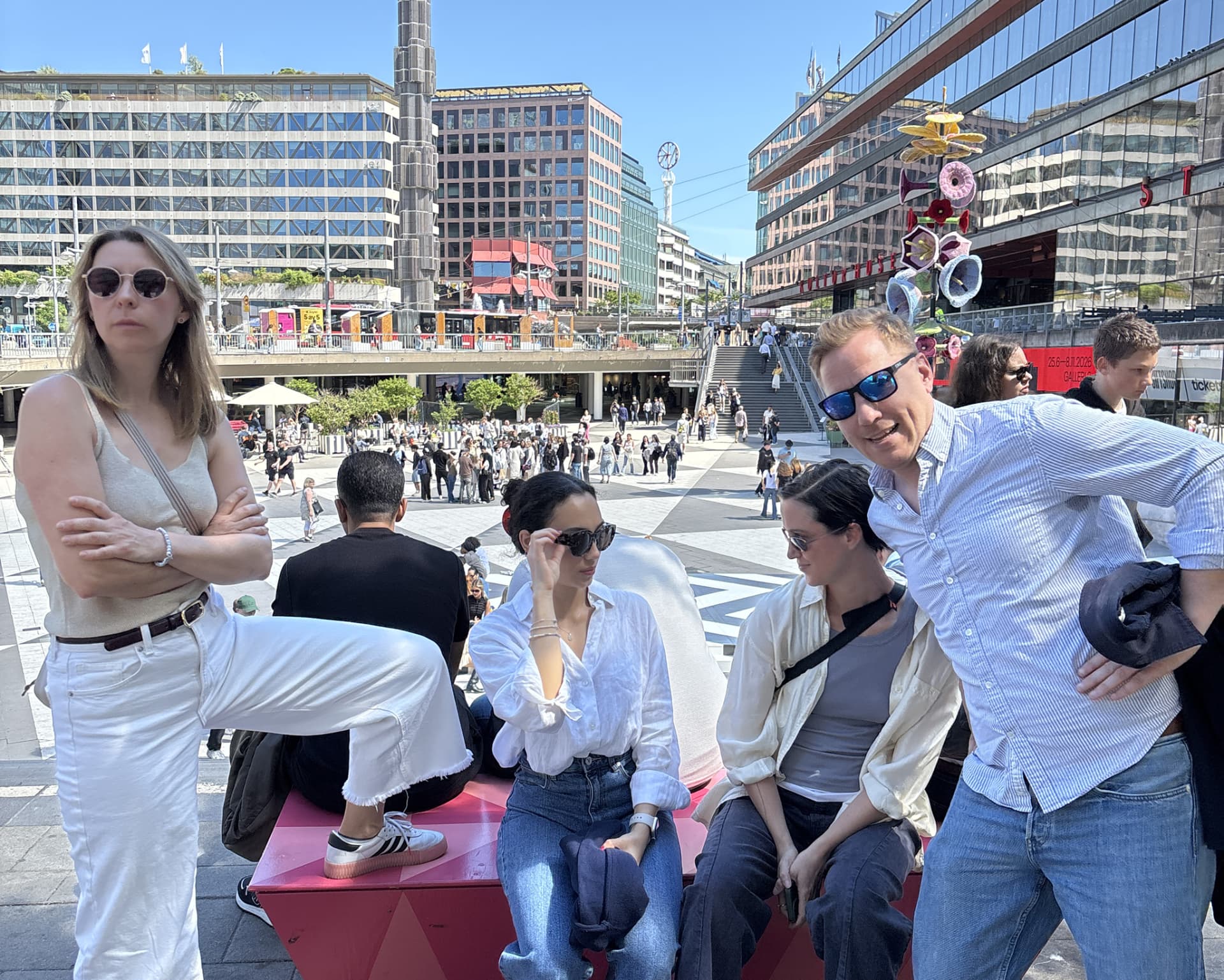
Every mural, café, clock tower, and park bench tells a story. A city scavenger hunt app turns those stories into experiences people actually want to explore.
 AuthorSteve Dunkley· Head of Growth9 min read
- Setting
- Outdoor · City Streets
- Best For
- Cities · Tourism Boards · Chambers of Commerce
- Format
- Self-Guided City Hunt
- Group Size
- 25–5,000
- Duration
- 2–3 hr or Always-On
- Tech Needed
- Phones + ReadySet App
Cities are living game boards. Every mural, café, clock tower, and park bench tells a story — and a city scavenger hunt app turns those stories into interactive experiences that visitors and residents actually want to explore.
What a City Scavenger Hunt App Is (and Why Cities Need One Now)
A city scavenger hunt app is a mobile, GPS-enabled game that guides people through real-world locations using challenges, riddles, quizzes, and creative tasks. Players open the app on their phone, follow a map to designated stops, and complete missions — snapping photos, answering trivia, scanning codes — to earn points and climb a leaderboard. Everyone explores at their own pace, stopping for coffee or sights whenever they like.
This piece is for cities, tourism boards, and chambers of commerce that want to activate both residents and visitors through gamified exploration. Whether the goal is boosting foot traffic on quieter streets, promoting local businesses, or building community pride, a digital hunt turns the city into an adventure people of all ages can join.
The timing is right. Travellers and locals alike have shifted toward outdoor, self-guided, flexible experiences. People want to roam freely, discover hidden gems on their own terms, and skip the crowded guided group. An app-led scavenger hunt fits that demand perfectly — no ticket booth, no fixed schedule, no bus.
ReadySet is a B2B event technology platform that lets cities build and host their own branded hunt-style experiences without hiring a developer or commissioning a custom app. You design the game in a web dashboard, participants play on their own phones, and you get live data on engagement.
Tourism, Engagement, and Economic Impact in One Format
A well-designed hunt blends sightseeing, gamification, and local commerce into a single experience that keeps people moving, spending, and sharing. Photo challenges inspire creativity and memorable interactions, while live leaderboards create a competitive atmosphere that keeps players going.
The real power is connecting attractions with small businesses along a cohesive route. Picture a "Downtown Discovery Hunt" in a mid-sized city: twelve stops that include a heritage square, a public mural, three independent shops, a local theatre, a park, and a café. Players earn points for answering a history quiz at the square, snapping a group photo at the mural, and collecting a staff signature at the bookstore. The chamber measures success by foot traffic on secondary streets and by surveying participating shops.
Most cities don't just want to be listed on a third-party platform — they want control over branding, business partnerships, and data. That's where a purpose-built platform matters. ReadySet collects data on participation, check-ins, and popular locations, giving you proof points for stakeholders, sponsors, and future funding.
The outcomes cities care about are increased foot traffic on main streets, longer dwell times at checkpoints, higher spend per visitor, and better distribution of visitors beyond the top three iconic landmarks. A scavenger hunt is one of the few programmes that can deliver all four at once.
How It Works in a City Context
The mechanics are straightforward. Players join on their phones, receive challenges tied to real-world locations, earn points for completing them, and watch progress on a live map. Most hunts take two to three hours — an ideal half-day activity for tourists and a fun weekend outing for residents.
The typical flow:
- Discovery — A visitor sees a QR code on a poster in the hotel lobby, or a link on the city tourism website.
- Join — They scan the code or follow the link, enter an event code, and join the hunt. No account needed.
- Play — Interactive maps guide teams from one landmark to the next. At each stop, players complete a challenge: a quiz about local history, a photo mission, or a creative task.
- Score — Automated scoring keeps the hunt flowing without a moderator. Real-time syncing across devices means teams can split up and still contribute.
- Finish — Players see their final score, compare against other teams on the leaderboard, and share photos.
A good city hunt needs precise GPS for clue unlocking. Location-based clues open as teams reach real-world spots, verifying that players are actually at the landmark rather than clicking from the sofa. QR challenges at partner businesses add a layer of in-person verification that GPS alone can't provide.
ReadySet powers this entire flow. Organisers design the game in a web-based studio — placing checkpoints on the map, assigning challenge types, setting time windows so tasks only unlock during business hours. Offline play keeps things running in parks, waterfronts, and underground historical sites with no signal.
Hunts can be always-on, available year-round for self-guided exploration, or scheduled for a summer festival, a Christmas market crawl, or an autumn restaurant week.
Use Cases for Cities, Tourism Boards, and Chambers
Three segments benefit most: city governments, destination marketing organisations, and local business associations. Each has different goals, but one flexible platform serves them all.
Tourism boards. A "Historic Waterfront Quest" designed to encourage off-season visits, with extra points for visiting local cafés and maritime museums. The quest becomes a reason to visit in shoulder season — no ticket required, just a smartphone and curiosity.
Chambers of commerce. A month-long "Shop Local Scavenger Hunt" that rewards players for visiting independent retailers and collecting digital stamps. Complete five stops, earn a voucher. Complete all twelve, enter a gift card drawing. It's a modern loyalty programme disguised as a game.
Civic engagement. A "Civic Pride Hunt" where residents visit libraries, community centres, and public art while answering quizzes about local programmes and services. Exploration that educates.
Festivals and events. A summer arts festival can use a hunt to disperse crowds across several venues and stages, reducing congestion at a single hotspot while making sure every vendor and performer gets discovered.
Templates and reusable content make it practical to launch multiple hunts across a season — or across the whole year.
Designing Challenges People Actually Finish
The quality and variety of challenges determine whether people finish the hunt, tell their friends, and come back for another round. Varied challenge types prevent monotony.
- Photo missions — "Snap a team selfie in front of the 1893 clock tower" or "Find the dragon mural on Elm Street and strike your best pose." These generate shareable memories.
- Quizzes and riddles — "What year was City Hall built?" or "Decode the Latin inscription above the library entrance." Educational, satisfying, and easy to build from local history.
- GPS check-ins — Arrive near a landmark and the challenge unlocks automatically. Great for parks, monuments, and scenic overlooks.
- Creative tasks at businesses — "Ask the barista for the secret menu item and record a short video." Video challenges add an extra layer of proof and fun.
- Ghost tours and themed trails — "Local Legends & Ghost Stories" taps the eerie side of city history, perfect for October or evening play.
ReadySet's drag-and-drop builder lets city teams add new challenge types, set difficulty levels, and tag challenges for families, kids, students, or corporate groups. Connecting challenges into themed hunts like "Street Art Safari," "Green Spaces and Gardens," or "Café Crawl" gives you a full programme of content from a single platform.
Team Building and Community Building
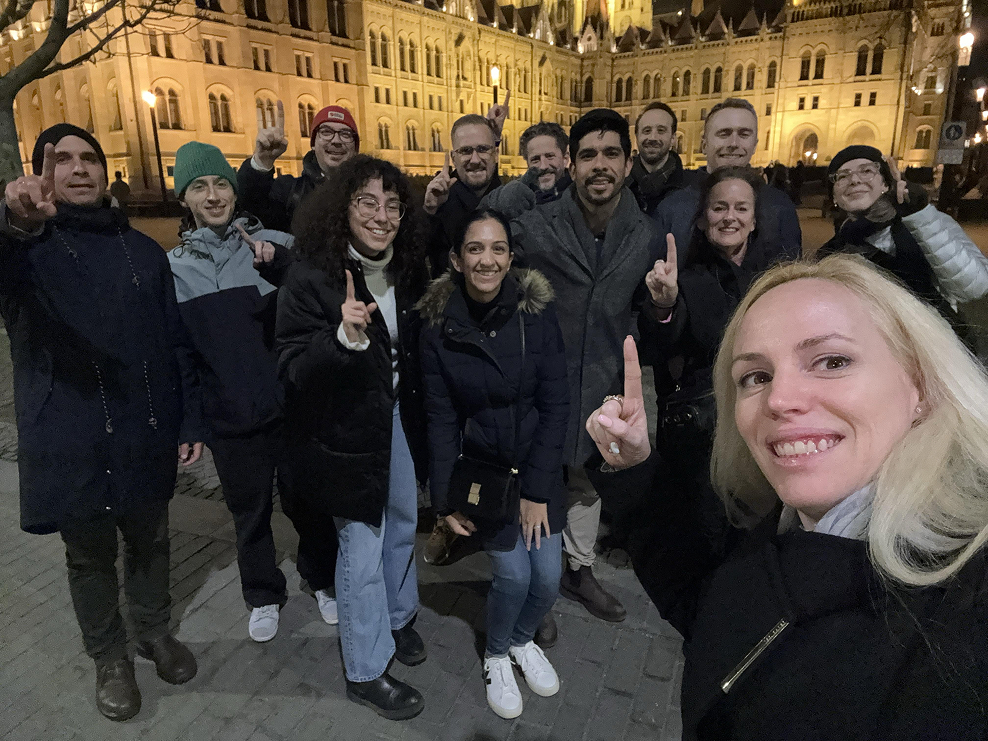
Scavenger hunts are already one of the most popular team building formats, and for good reason — they get people out of conference rooms and into real-world collaboration.
Cities can promote ReadySet-powered hunts as turnkey team building for local employers. A "Downtown Collaboration Challenge" during offsite season brings corporate spend into local restaurants and shops while showcasing the city to employees who might never otherwise explore it. University orientation groups, youth organisations, and meetup communities all benefit from using the city as their game board.
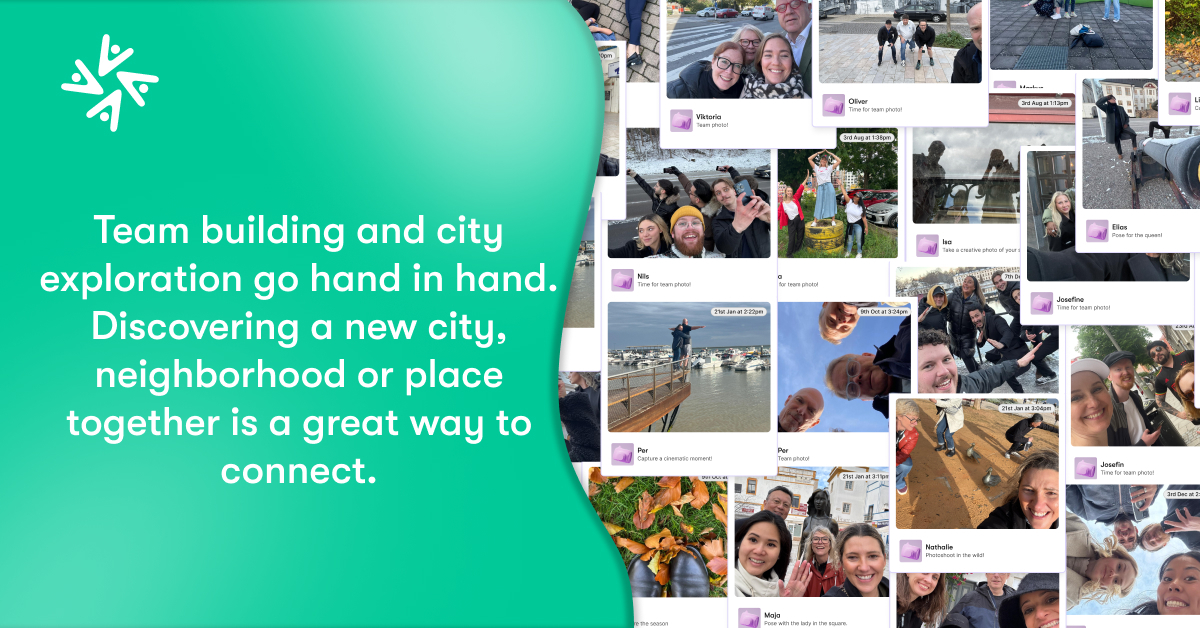
The community angle is just as powerful. Hunts that mix locals and visitors, encourage intergenerational play, and highlight community stories or local heroes connect people to place in ways a traditional tour never could. Live leaderboards, time-limited tournaments, and group photo streams make every hunt social and energetic. ReadySet can be co-branded with city or chamber logos, so the experience feels like a civic occasion rather than a generic app.
Promoting Local Businesses and Sponsors
For chambers of commerce and business improvement districts, a hunt is a modern "shop local" engine — and a sponsorship opportunity that generates trackable engagement.
Locations can be tied to specific businesses with tasks that drive real interactions: "Try a sample at Riverside Roasters," "Find the secret menu item at Main Street Deli," or "Ask a staff member three trivia questions about the shop's history." Self-guided hunts allow breaks and photo stops anytime, which means players naturally linger, browse, and spend.
Branded rewards deepen the connection. Digital coupons unlocked after a challenge, sponsor-branded badges, or prize drawings funded by a business improvement district turn every completed mission into a lead for a local business. ReadySet supports custom branding, sponsor logos, and links inside the experience — turning the hunt into a measurable marketing channel, not just a game.
Consider a "Coffee & Culture Hunt" where five local cafés and two galleries participate, each offering a discount or freebie to players who complete their challenge. The chamber funds a grand prize from registration fees or sponsor contributions. Businesses get foot traffic, players have a great time, and the chamber demonstrates clear ROI.
For long-term programmes, chambers can run quarterly hunts with rotating sponsors on the same underlying game structure. Swap the sights, refresh the clues, add a seasonal theme, and you have a year-round engagement programme without reinventing anything.
What to Look For in a Hunt App
Not every hunt app is built for public-sector scale. Evaluate platforms on scalability, ease of use, and participant experience — not just basic GPS check-ins.
- Intuitive web-based builder — non-technical staff can create and edit hunts without a developer.
- GPS and map integration — precise location-based challenges that unlock at the right spot.
- Multimedia support — photos, videos, and audio bring each location to life.
- Live leaderboard and real-time tracking — keeps events exciting and lets organisers monitor progress.
- Analytics dashboards — participation, completion rates, and location popularity.
- Branding and white-label options — the experience reflects your city's identity, not a generic app.
- Accessibility features — wheelchair-friendly routes, multi-language content, adjustable difficulty.
- Offline capability — play continues in parks, tunnels, and dead zones.
ReadySet competes here with drag-and-drop game design, AI-assisted content creation, mobile multiplayer gameplay, and robust branding. Support for large events, privacy controls, and multi-language content for international visitors make it purpose-built for cities and organisations. Post-event reporting gives organisers the insight they need when justifying the programme to a council or board.
From Idea to Live City Hunt in Five Weeks
You don't need months. A realistic phased timeline:
- Week 1–2 — Define goals (seasonal tourism, shop local, civic engagement), choose neighbourhoods and partners, outline the storyline, and decide whether the hunt is always-on or event-specific.
- Week 2–3 — Build the hunt in ReadySet Studio. Add challenges, place checkpoints, upload photos and clues, and brand the experience with city colours and logos.
- Week 3–4 — Run an internal test with tourism staff or partner business owners. Check GPS accuracy, verify business interactions, refine content.
- Week 5 — Public launch with marketing support: social posts, QR posters around the city, hotel concierge briefings, and a mention on the city website.
Cities can start even faster with ReadySet templates — pre-built formats like "Downtown Discovery" or "Historic District" — customised with local content. The key to longevity is iteration: refresh challenges every season, rotate prize partners, add routes for new neighbourhoods, and introduce themes like a Halloween ghost trail or a spring garden walk.
Measuring Success
Data matters to every public-sector stakeholder who needs to justify a programme. Sponsors want proof of exposure. Tourism boards want evidence of economic impact. A good hunt app delivers both.
- Number of participants and unique users per hunt
- Completion rates — what percentage of players finish all checkpoints
- Time spent in different areas and dwell time at specific businesses
- Most popular and most skipped challenges and locations
- Challenge completion statistics broken down by type
Connect these insights with existing tourism data — hotel stays, visitor centre footfall, event attendance — to tell a stronger story. In-app surveys capture the qualitative side too: "I never knew this park existed" or "We'll definitely come back to that bookshop."
A tourism board might discover that a lesser-known park became a top-rated stop, prompting more permanent signage or programming there. That kind of insight turns a one-time game into a long-term planning tool, and supports grant or funding applications with concrete numbers.
Getting Started
ReadySet is a strong fit for cities because it requires no custom development, supports flexible hunts for tourism and team building, and scales from a small pilot to a city-wide programme. You don't need to be a developer or hire an agency — though you can work with one if you prefer.
The model is practical: start with a free game for up to 25 participants, ideal for pilots or internal testing. Once you're confident in the format, paid plans support larger public launches with hundreds or thousands of players, advanced branding, and sponsor integrations.
A typical engagement looks like this: schedule a demo, discuss your goals — perhaps revitalising downtown foot traffic or building a year-round exploration programme — then co-design an initial hunt. ReadySet supports both DIY setups by city staff and collaborative builds with agencies or event partners.
Your city's streets, murals, cafés, and parks are already the game board. The stories are already there. Start creating your game today — your city's next adventure can be live in a matter of weeks.
Build an activation like this
Your venue. Your brand.
Our engine.
ReadySet powers branded interactive experiences for agencies, brand teams, and enterprise event programs, without the standalone app build.