

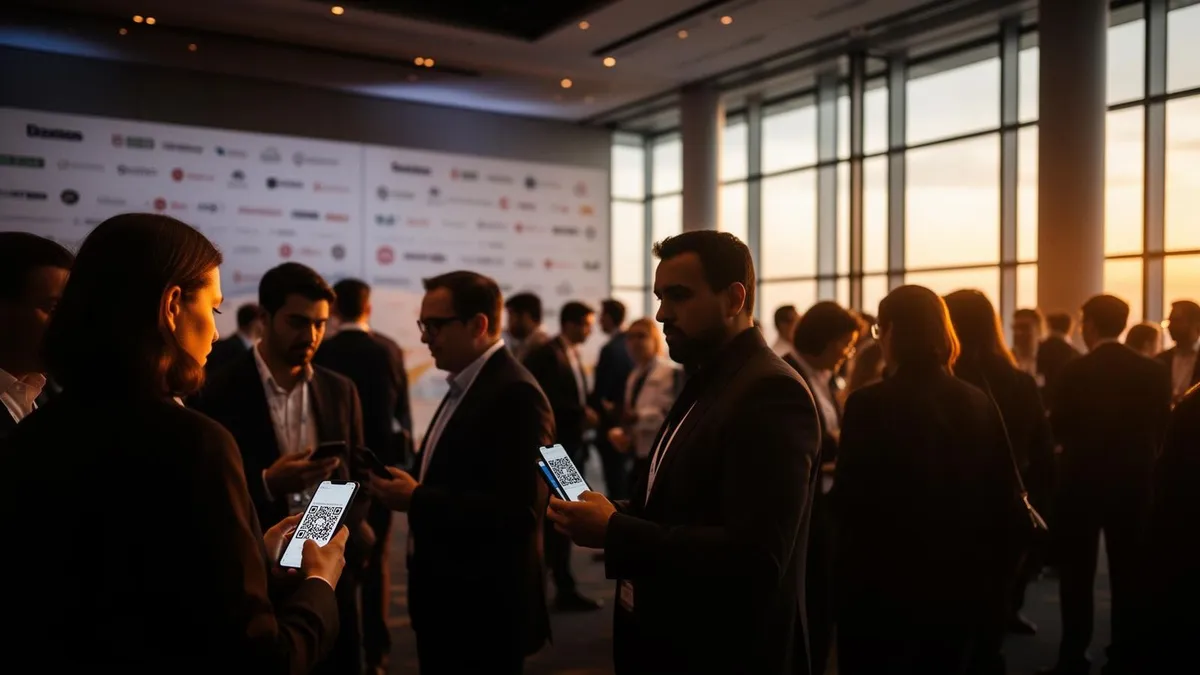
Inspiration · Conferences
10 scavenger hunt ideas for conferences and networking events
Creative multiplayer formats that turn conferences into interactive social experiences — sponsor passports, trivia races, hidden QR challenges, and more.
 AuthorSteve Dunkley· Head of Growth8 min read
- Setting
- Indoor · Conference Venues
- Best For
- Conferences · Trade Shows · Networking
- Format
- Multiplayer Scavenger Hunt
- Group Size
- 50–2,000
- Duration
- 1–3 Days Pick Up & Play
- Tech Needed
- Phones + ReadySet App
Why scavenger gameplay works at conferences
Bring the room together without forcing it.
Conferences bring people into the same building. They rarely bring them into the same conversation. Scavenger-hunt-style gameplay turns passive attendees into active participants — encouraging movement, discovery, and the kind of low-stakes interaction that real networking is built on.
Ten formats below, each designed for multiplayer ReadySet experiences. Mix, remix, or build them branded for your event.
Ten formats
Ideas worth stealing.
Each one is a real format we've run, watched, or designed for conferences and networking events. Pick one, layer two, or branded up a full passport.
- 01
Sponsor Passport Challenge
Attendees collect digital stamps by visiting sponsor booths and completing a short challenge at each one.
- Gameplay structure
- Every sponsor becomes a checkpoint with a branded mini-mission: a trivia question, a photo, or a short conversation prompt.
- Why it works
- Sponsors get measurable, qualified foot traffic. Attendees get a clear reason to walk a booth they'd otherwise skip.
- The social angle
- Booth conversations become genuine — the prompt opens the door so attendees don't have to.
- 02
Speaker Trivia Race
A live, session-by-session trivia layer that rewards attendees for actually listening to talks.
- Gameplay structure
- Questions unlock after each session ends. Fastest correct answers climb the leaderboard.
- Why it works
- Speakers love it. Attention spikes. The post-talk hallway gets noisier in the best possible way.
- The social angle
- Teams compare answers and form opinions about talks together, instead of staring at LinkedIn.
- 03
Networking Missions
Prompted introductions disguised as gameplay — find someone from a different team, role, or country.
- Gameplay structure
- Each mission targets a profile (e.g. 'a founder you've never met'). Completion needs a quick photo or a verification code from that person.
- Why it works
- Removes the awkwardness of cold introductions. The game gives both sides a script.
- The social angle
- Engineered serendipity. People meet who would otherwise never cross paths.
- 04
City Exploration Game
Extend the conference into the host city with after-hours multiplayer gameplay.
- Gameplay structure
- Walkable checkpoints around landmarks, partner venues, and food stops. Pick Up & Play across an evening or full day.
- Why it works
- Solves the 'what do we do after the keynote' problem. Doubles as a destination experience.
- The social angle
- Small teams form, head out together, and come back with shared stories — the highest-leverage networking of the week.
- 05
Hidden QR Challenges
QR codes tucked into signage, lanyards, swag, or printed materials unlock bonus challenges and points.
- Gameplay structure
- Cryptic clues hint at locations. Codes can stack — find three, unlock a bigger reward.
- Why it works
- Cheap to deploy. Adds a treasure-hunt layer over the whole venue without changing the floor plan.
- The social angle
- Spot-the-code becomes a running joke. Teams trade hints in real time.
- 06
Team-Based Checkpoint Race
Classic team format. Pre-assigned teams race through checkpoints during a fixed window.
- Gameplay structure
- Ready Set Go mode, 60–90 minute window, leaderboard live on hallway screens.
- Why it works
- The single highest-energy format for a conference. Works as opening party, closing party, or mid-conference reset.
- The social angle
- Strangers become teammates in five minutes. The leaderboard does the rest.
- 07
Industry Knowledge Hunt
A trivia-driven layer that quietly teaches your industry's vocabulary, history, and current debates.
- Gameplay structure
- Themed checkpoints (e.g. 'history', 'trends', 'product fundamentals') with progressive difficulty.
- Why it works
- Onboarding for first-timers; bragging rights for veterans. Educational without lecturing.
- The social angle
- Mixed-experience teams outperform solo experts. Mentorship moments happen naturally.
- 08
Trade Show Discovery Challenge
A guided tour of the expo floor that incentivizes attendees to discover companies they haven't heard of.
- Gameplay structure
- Categories instead of named booths — 'a company under three years old', 'something hardware', 'a tool you've never seen'.
- Why it works
- Drives traffic to smaller exhibitors and helps attendees actually map the floor.
- The social angle
- Attendees recommend booths to each other — peer discovery beats the directory.
- 09
Creative Photo Missions
Open-ended prompts that produce the conference's best content.
- Gameplay structure
- 'The most awkward handshake', 'A keynote moment in three frames', 'Your team mid-laugh'. Submissions surface in a live feed.
- Why it works
- Generates a week of social content with zero comms effort. Attendees become the creators.
- The social angle
- Photos go on the public screen. Laughter becomes the loudest sound in the hall.
- 10
Cross-Team Collaboration Missions
Challenges that can only be solved by combining people from different organizations.
- Gameplay structure
- Mini-team prompts (e.g. 'find two strangers and answer this together') with shared-team scoring.
- Why it works
- The most underrated networking format — collaboration creates stronger ties than conversation alone.
- The social angle
- Forces small, real partnerships. The teams that win usually exchange contacts after.
Build the one for your event
Build an interactive conference experience with ReadySet.
Tell us about the conference, the venue, and the audience — we'll help you shape the format that fits.